






Listen to the audio version of this article below.
Small island states such as Kiribati face digital transformation conditions unlike those in many parts of the world. The country spans a vast area of the Pacific Ocean, where connectivity is fragile, devices are costly, digital skills are uneven, and public institutions operate with limited resources. These realities create layers of complexity when modernising public services.
Despite these constraints, Kiribati is at a moment of opportunity. Regional connectivity investments, mobile-first service models, and global advancements in digital public infrastructure are opening the door for a shift from paper-based administration to a modern, user-centered digital government. The dynamics at play – from geography to infrastructure to institutional capacity – illustrate how context profoundly shapes the design of digital transformation.
A National Project to Accelerate Kiribati’s Digital Shift
To harness this momentum, Kiribati launched the Kiribati Digital Government Project (KDGP), a national initiative designed to strengthen public services, improve data systems, and set long-term digital development priorities. Supported by the World Bank and implemented by the Ministry of Information, Communication and Transport’s Digital Transformation Office, the Ministry of Justice, and the KDGP Project Management Unit, the project aims to build the foundations needed for more connected and efficient governance.
The first phase of the initiative has been entrusted to NRD Companies. This eight-month engagement, running until May 2026, focuses on establishing the strategic architecture, frameworks, and planning tools that will guide digital transformation in the years ahead.
Two Weeks on the Ground in South Tarawa
From 12 to 27 November, 2025, the NRD Companies consulting team conducted an intensive on-site mission in South Tarawa. The goal was to gain a detailed understanding of the current situation and use this evidence to develop a whole-of-government future architecture and an actionable roadmap for upcoming reforms.
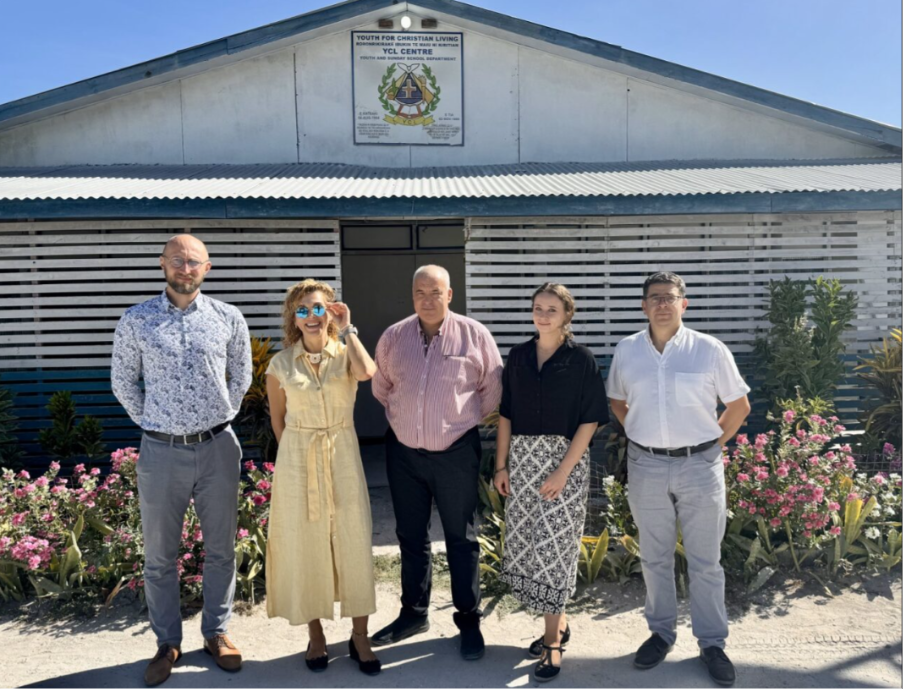
Experts held discussions across ministries and agencies on topics including digital government policy, institutional development, enterprise architecture, digital payments, and digital identity. These conversations highlighted familiar challenges: existing data gaps, paper-based registries, limited services delivery across remote islands, staff shortages, and resilience issues tied to geography and limited infrastructure. Such conditions show how structural and environmental factors shape the pace and direction of digital transformation.
Insights From Institutions
During the two-week mission, discussions covered enterprise architecture, interoperability, registry quality, data governance, and service delivery pathways in sectors including justice, health, education, social protection, policing, land management, business regulation, and tourism. A consistent narrative emerged: strong motivation for improvement combined with systems and processes that must evolve to support efficient, inclusive service delivery.
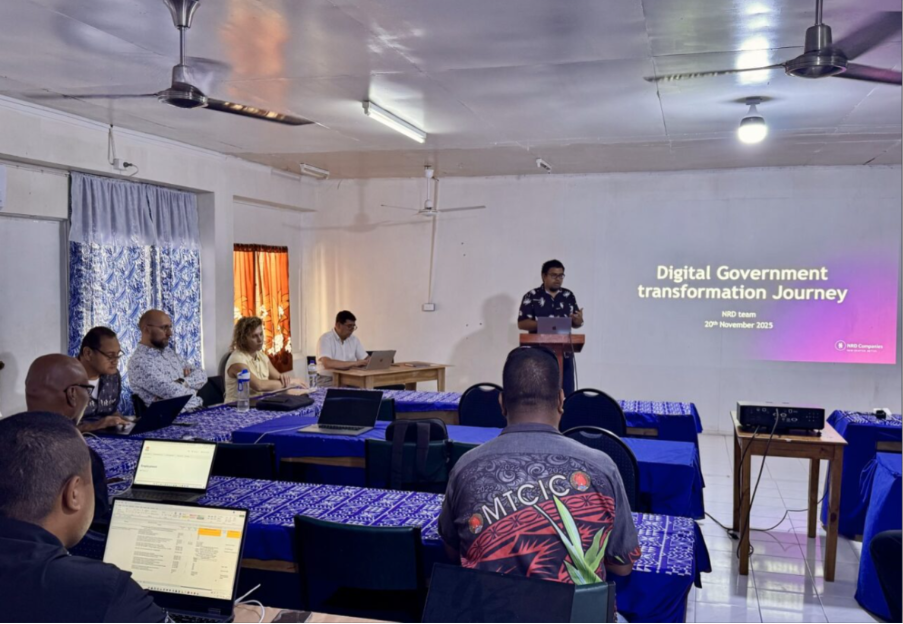
This alignment between ambition and practical reality is a central consideration in any public sector reform effort. Successful digital transformation often hinges not on individual technologies but on the readiness of institutions, data, and organisational structures to support change.
Listening to Communities
A focus group with community members added the essential human dimension. Participants described the affordability challenges related to devices, varying levels of trust in digital systems, language barriers, limited digital skills, and the importance of assisted channels for people not yet fully online. These reflections underscore the value of grounding digital transformation in real user needs and everyday experiences.
A Shared Vision Through the National Workshop
The Digital Government Transformation Workshop on 20 November brought together representatives from MICT, the Ministry of Justice, the Ministry of Finance, and several other institutions. The session placed Kiribati’s digital journey within broader global trends, where online services are evolving into proactive, integrated, data-driven GovTech models.
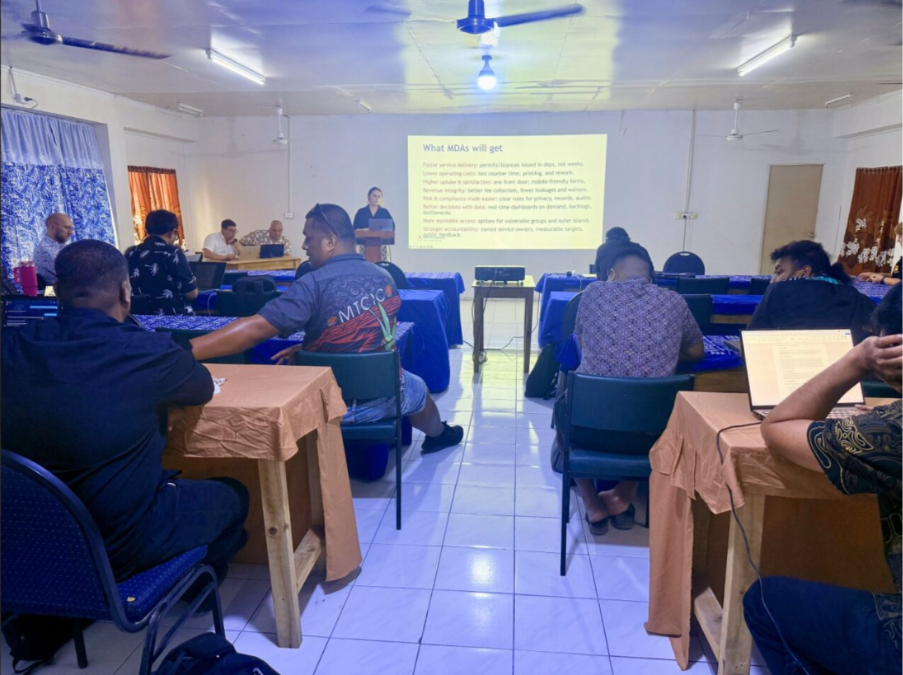
Participants explored the Pacific context, recognising the role of reliable connectivity, the advantages of designing services with a mobile-first mindset, and the foundational importance of digital identity, interoperability, and high-quality data. The workshop fostered shared understanding and highlighted the importance of coordinated leadership in steering digital reforms.
Looking Ahead
This mission represents a significant step in establishing the digital foundations Kiribati needs. Despite the challenges, the determination within government indicates readiness for meaningful progress. With a clear strategy, collaborative effort, and evidence-based planning, Kiribati is moving toward a digital government that is modern, accessible, and centred on its people.
The experience shows how context-first analysis, community insights, and cross-institutional cooperation can create the conditions for sustainable digital transformation – even in environments shaped by geographic and infrastructural complexity.


