






Listen to the audio version of this article below.
At the 13th Annual ASORLAC Conference in San Salvador, registry authorities from across Latin America and the Caribbean came together to discuss the opportunities and challenges shaping the future of registry modernization. Of all the topics discussed, one kept attention: AI and automation are becoming central to the next generation of registry services.
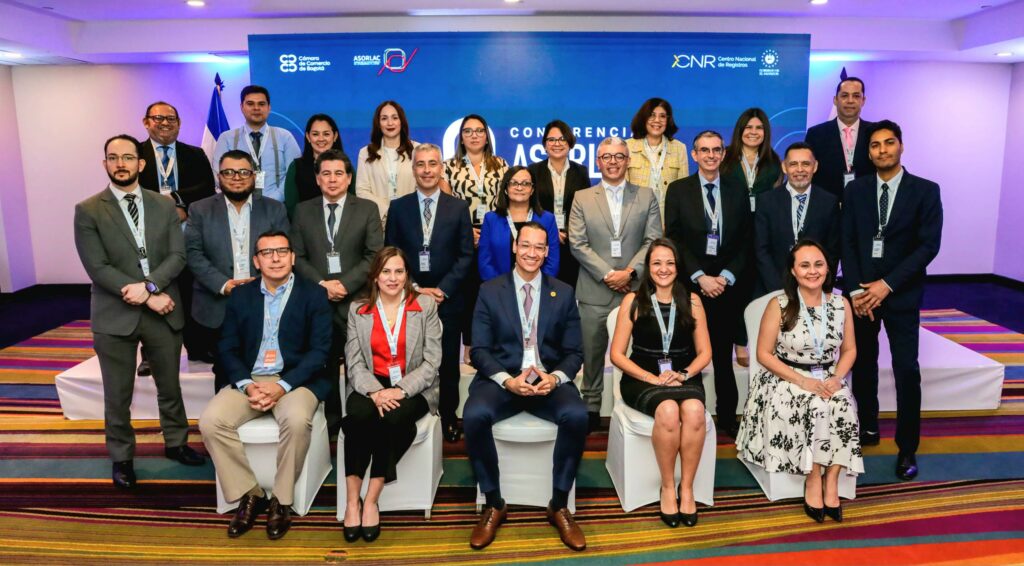
Shared Vision: AI as a Partner
As ASORLAC members explored the future of registry modernization, the conversation quickly gravitated toward AI and automation. NRD Companies shared a forward-looking perspective on how these technologies can transform registry processes when applied responsibly.
In NRD Companies presentation about technological innovations in registries, it was demonstrated how AI can support every stage of the business registration journey – from identity verification and data entry to automated document processing and certificate generation. Intelligent assistants, automated classification, and real-time validation can significantly reduce workloads, improve accuracy, and speed up service delivery.
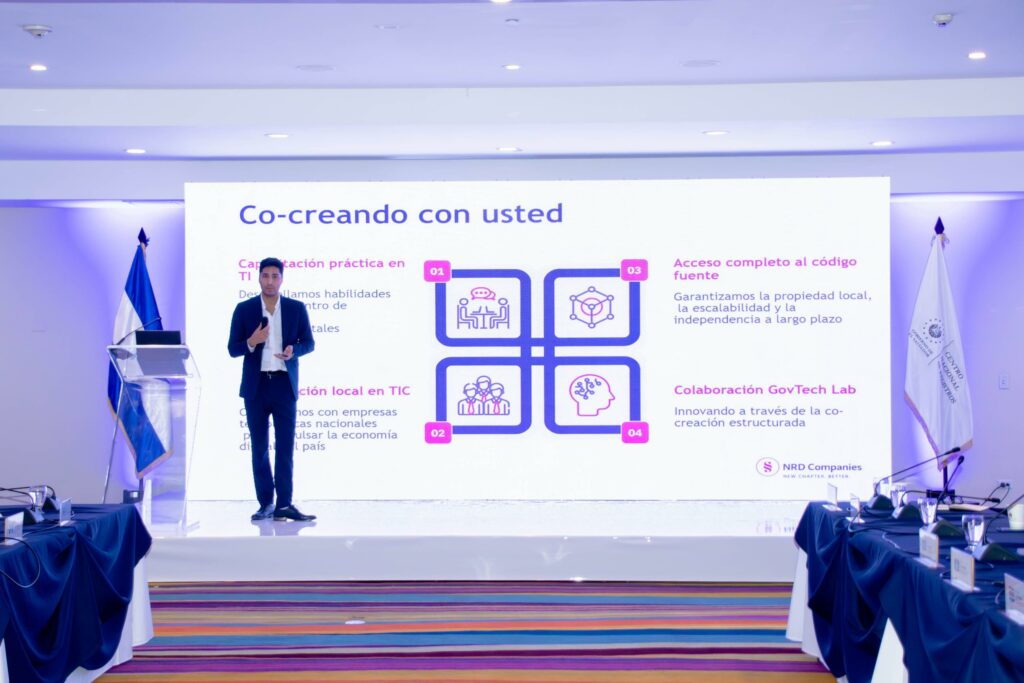
“Working globally with registry authorities, we see an accelerating rush to adopt AI. Unfortunately, only a handful of institutions give sufficient attention to the regulatory and governance frameworks that must come first if AI is to be used responsibly. This becomes even more critical when AI is granted access to core registry technologies. Having a responsible AI governance framework in place is what prevents AI from becoming a risk rather than an asset.” – states Ieva Tarailiene, Head of Registries Practice at NRD Companies.
This perspective aligned with concerns raised by registrars across the region: the need to modernize efficiently while protecting the legal certainty, accountability, and trust that define their institutions.
Alongside NRD Companies, Google Cloud also shared examples of AI being applied in registry environments, further highlighting how the sector is steadily moving toward more governed and responsible use of these technologies.
How AI can support Registry Authorities
Across Latin America and the Caribbean, registries are facing increasing pressure:
- Growing service volumes;
- Manual bottlenecks;
- Fragmented or legacy systems;
- Complex verification and compliance workflows;
- Rising security expectations;
- And many others.
AI and automation directly address these challenges by enabling:
- Faster and more accurate data processing;
- Automated document classification and metadata extraction;
- Intelligent assistants for user guidance and staff support;
- Improved name checks, identity verification, and fraud prevention;
- Generative tools for drafting decisions, observations, or certificates;
- And many more.
When embedded into structured, well-governed digital platforms, AI becomes a force multiplier for registrars.
NRD Companies’ Commitment to the Region
With decades of experience in registry transformation and active engagements in the Caribbean and Latin America, NRD Companies brings both technological capability and institutional expertise to support responsible, sustainable modernization.
Its Unified Registry Platform (URP©) provides a secure foundation for introducing automation and AI into registry workflows while maintaining legal rigor. Designed for flexibility, interoperability, and low-code extensibility, URP© enables registries to evolve gradually and confidently. NRD Companies continues to collaborate with governments across the region, reinforcing the same principle shared at ASORLAC: digital transformation succeeds when technology, governance, and human expertise evolve together.


