






Listen to the audio version of this article below.
The World Bank has released the Business Ready 2025 report – the second edition of its new flagship benchmarking initiative replacing the former Ease of Doing Business index. As part of a three-year rollout (2024–2026), this edition significantly expands both the scope and depth of assessment.
While B-READY 2024 covered 50 economies, B-READY 2025 evaluates 101, with further expansion planned to more than 160 economies in 2026. Alongside broader coverage, the methodology itself continues to evolve, incorporating refinements that improve how business environments are measured and understood.
This marks an important transition: from measuring regulations in isolation to assessing how effectively they work in practice.
What is B-READY and Why It Matters
B-READY replaces the Ease of Doing Business index with a more comprehensive framework. Instead of focusing only on regulatory burden, it evaluates the full business environment through three pillars: regulatory framework, public services, and operational efficiency.
This shift reflects a more realistic understanding of how economies function. It is no longer enough to have strong laws on paper – what matters is whether businesses can navigate systems efficiently, access services, and operate without unnecessary barriers.
As highlighted by the World Bank, this approach aims to better connect policy design with real economic outcomes, particularly job creation and private sector development.
Key Insights from B-READY 2025
The report reveals several important global patterns. Economies are, on average, only around 60% of the way toward a fully supportive business environment, indicating substantial room for improvement. At the same time, those economies that face the greatest pressure to create jobs – particularly with young and growing populations – are often the least business ready.
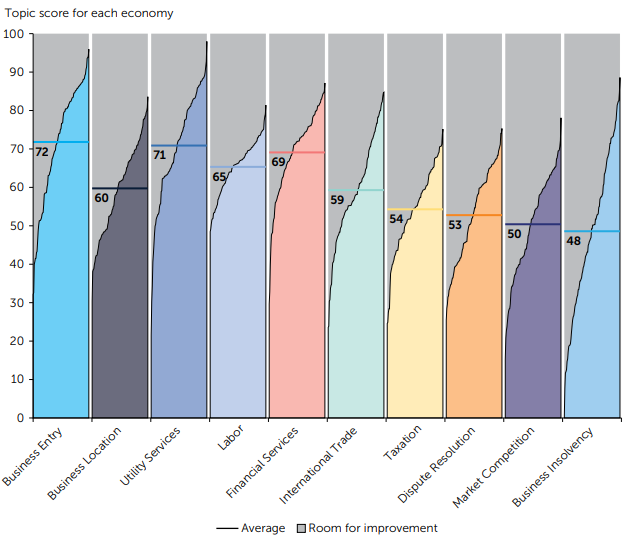
Another consistent finding is the gap between regulation and implementation. Governments tend to perform better in designing legal frameworks than in delivering the public services needed to support them. This creates inefficiencies that directly affect businesses, increasing time, cost, and complexity.
Focus on Business Entry: A Foundation for Business Readiness
Among the ten B-READY topics, Business Entry plays a critical role. It represents the first interaction between businesses and the state and sets the foundation for all subsequent activities.
Within this topic, two pillars are particularly important: Regulatory Framework and Public Services. Together, they define how easily and efficiently a business can be established.
A strong regulatory framework ensures that requirements are clear, transparent, and aligned with international standards. At the same time, effective public services determine whether these requirements can be fulfilled quickly and efficiently in practice.
Regulatory Framework: Progress with Variations
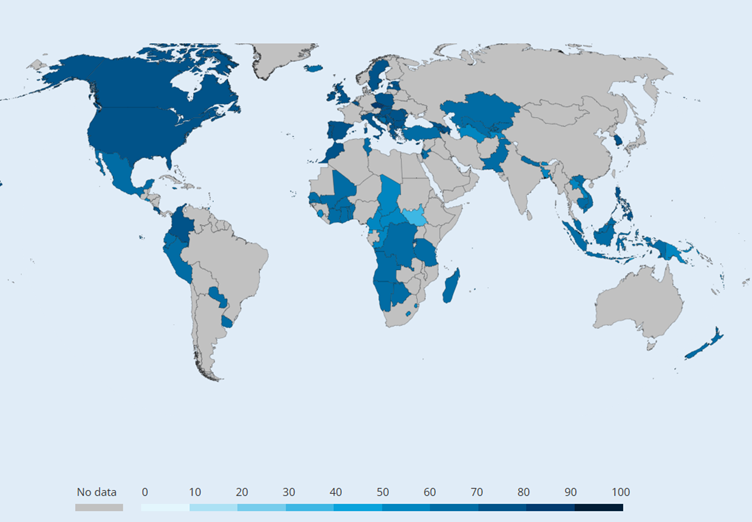
Across economies, regulatory frameworks tend to be the strongest-performing pillar. Many countries have made progress in aligning their legal systems with international best practices, particularly in areas such as company registration requirements and beneficial ownership transparency.
For example, economies such as Czechia, Estonia, and Spain rank among the top performers in the Regulatory Framework pillar, reflecting well-structured legal frameworks that support business entry. These countries have established clear requirements, strong transparency standards, and relatively streamlined procedures for starting a business.
However, performance still varies significantly. While some economies demonstrate highly efficient and predictable regulatory environments, others maintain more complex or restrictive requirements. In countries such as Chad or the Central African Republic, lower scores reflect regulatory constraints and gaps in legal frameworks that can slow down business entry and discourage formalization.
Public Services: The Key Bottleneck
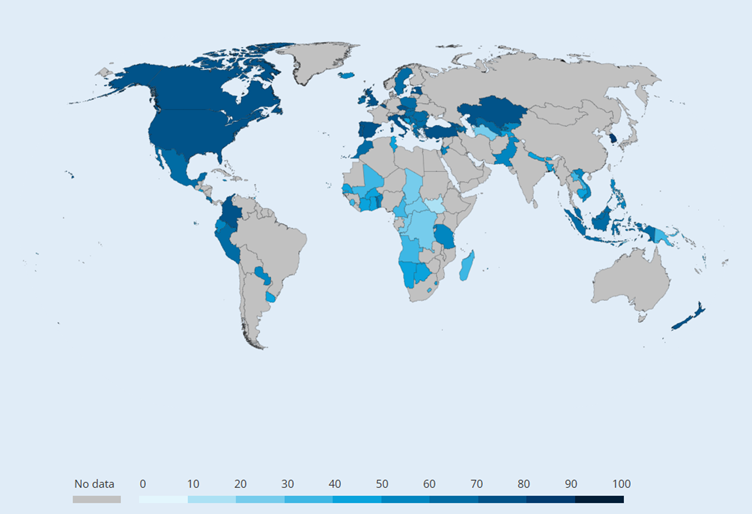
In contrast, the Public Services pillar consistently shows weaker performance. Even where regulations are well designed, the systems supporting them – such as online registration platforms, data exchange between institutions, and access to information – are often underdeveloped or fragmented.
Top-performing economies such as Italy, Singapore, and Estonia stand out by offering fully digital, integrated services. In these countries, businesses can complete registration processes online, benefit from interoperable systems, and access transparent, up-to-date information, significantly reducing time and administrative burden.
On the other hand, in many lower-performing economies, public services remain partially digital or manual. For example, countries like Papua New Guinea or Sierra Leone face challenges related to limited digital infrastructure and fragmented service delivery, resulting in slower processes and higher costs for businesses.
This gap between regulation and service delivery is one of the main constraints identified in the B-READY 2025 report.
From Measurement to Action
While B-READY provides a detailed framework, translating its methodology into practical action can be challenging. The assessment includes multiple layers – pillars, categories, indicators, and components – which require clear interpretation to identify priorities.
To support this, NRD Companies has developed tools and guidance focused specifically on the Business Entry topic, particularly the Regulatory Framework and Public Services pillars, which form the foundation of efficient business registration.
The B-READY Self-Assessment Online Tool allows institutions to evaluate their current performance across these pillars, identify gaps early, and better prepare for official assessments.
In addition, NRD Companies’ Guide to Navigating the B-READY Report provides a structured overview of the methodology, helping institutions understand what is measured, why it matters, and where improvements can have the greatest impact.
Looking Ahead
As the B-READY initiative continues to expand, it is becoming a key benchmark for governments seeking to improve their business environments and support economic growth.
Building a business-ready economy requires more than regulatory reform. It requires systems that work in practice – efficient, digital, and user-focused.
For governments, this presents both a challenge and an opportunity: to move beyond policy design and focus on creating environments where businesses can start, operate, and grow without unnecessary barriers.


Need some advice on an assessment of your current business readiness environment?



Thank you for your message!
Our team will review it and get back to you shortly. For urgent questions, you can reach us at connect@nrdcompanies.com