






About this publication
This publication is a research paper drawing on empirical evidence from an e-Invoicing project implemented by a national revenue authority in partnership with NRD Companies, it examines the impact of digitalization on VAT administration, tax compliance, and revenue collection, while offering lessons and recommendations for other tax authorities.
Note on Anonymization: To preserve confidentiality, the country and revenue authority have been anonymized, and certain identifying details have been removed or replaced.
Contents
- Introduction
- Optimized VAT Administration Processes and Operations
- Efficient Compliance Enforcement
- Improved VAT Revenue Collection
- Improved Taxpayers Experience and Motivation
- Benefits of the E-Invoicing Solution to the Country’s Revenue Authority
- Challenges the Revenue Authority Faced During the Implementation of the E-Invoicing Solution
- Lessons Learned from Implementation of the E-Invoicing Solution in an African Country and Recommendations to Other Tax Authorities
- Conclusion
Introduction
In an era where digital transformation is reshaping government operations and the provision of public services, tax authorities worldwide are increasingly adopting innovative solutions to enhance efficiency, compliance, and revenue collection.
Digital Transformation – Critical for Tax Authorities
As the Organisation for Economic Co-operation and Development (OECD, 2022) emphasizes, digital transformation in tax administration is a critical enabler for improving compliance, reducing fraud, and ensuring fair and efficient tax systems. In line with this global trend, the national Tax Authority in an African country implemented the e-Invoicing solution marking a significant step toward the digitalization of Value Added Tax (VAT) administration. However, this was not the first fiscalization system introduced in the country. While the previous system provided a foundation for VAT monitoring, it faced limitations in scalability, enforcement, and integration with modern tax management tools, necessitating the transition to e-Invoicing solution. The technical partner for the implementation was NRD Companies, a global IT and consulting group of companies, specializing in governance an economic digital infrastructure development, with its own developed e-Invoicing solution.
The introduction of e-Invoicing solution has optimized VAT compliance enforcement, enhanced operational efficiency, improved transparency, and strengthened revenue collection capabilities.
This research paper examines empirical evidence of how digitalization has optimized tax administration in an African country, focusing on the impact of e-Invoicing solution on VAT enforcement, revenue collection, and overall tax system efficiency. Through data-driven insights and analysis, the study explores the challenges, benefits, and lessons learned from this fiscalization initiative, offering valuable takeaways for other tax administrations considering similar reforms.
The introduction of e-Invoicing solution has optimized VAT compliance enforcement, enhanced operational efficiency, improved transparency, and strengthened revenue collection capabilities.
Research Objectives:
- To identify areas of VAT administration impacted and optimized by the e-Invoicing solution.
- To determine and assess the benefits derived from the optimized areas of VAT administration in an African country.
- To evaluate on lessons learned from implementation of the e-Invoicing solution by an Tax Authority in an African country.
Research Questions:
- Which areas of the national revenue authority’s VAT administration has been optimized by the e-Invoicing solution?
- To what extent has the national revenue authority benefited from the e-Invoicing solution on VAT administration?
- What are the challenges faced by the national revenue authority in implementing the e-Invoicing solution?
- What are the national revenue authority’s key lessons learned and recommendations for implementing the e-Invoicing solution?
Benefits of E-Invoicing
In recent years digitalization has significantly transformed tax administration by enhancing the ability to collect, process, and monitor tax data. One of the key areas impacted by digitalization is the adoption of electronic invoicing (e-Invoicing) systems, which enable seamless integration between taxpayers’ systems and tax authorities, allowing for improved tracking of sales transactions and tax compliance (Bellon et al., 2022).
The Organisation for Economic Co-operation and Development (OECD) emphasizes that digital tax solutions not only reduce administrative burdens but also enhance transparency, making it easier for governments to enforce compliance and reduce fraud (OECD, 2022).
Qian et al. (2024) states that the benefits of digitalization for tax administration include improved revenue collection efficiency, enhanced compliance, and a reduction in tax evasion. Digital tools contribute to the transformation of key government fiscal income sources, ensuring a more stable fiscal environment. The African Tax Administration Forum (ATAF) notes that e-Invoicing systems bring multiple advantages, such as improved revenue performance, enhanced economic analysis based on accurate data, reduced administrative costs, mitigation of tax fraud and illicit financial flows, and better tracking of key economic activities (ATAF, 2024).
Carrillo et al. (2022) found that in economies where e-Invoicing was introduced, reported firm sales, purchases, and VAT liabilities increased by over 5% in the first year after adoption, demonstrating the system’s effectiveness in reducing underreporting. Furthermore, the International Monetary Fund (IMF) highlights that the adoption of digital technologies in tax administration can enhance tax collection and compliance, although the effects vary by the specific digital services or tools introduced (IMF, 2023).
Challenges to Be Considered
Despite these benefits, the implementation of digital tax administration system comes with several challenges. ATAF identifies various obstacles tax administrations face, including high system acquisition and compliance costs, power supply interruptions, low taxpayer digital literacy, resistance to change, technological barriers, inadequate change management strategies, the prevalence of cash-based transactions, and complexities in stock management module integration (ATAF, 2024). The OECD also notes that many developing economies face difficulties in aligning digital tax solutions with existing regulatory frameworks, leading to delays in implementation and limited adoption rates (OECD, 2023).
Best Practices and International Experience
International experiences demonstrate that digitalization alone is not sufficient to achieve optimal revenue mobilization. Bellon et al. (2022) emphasize that countries such as Peru have complemented digital tools like e-Invoicing with broader tax administration reforms to maximize effectiveness. This suggests that tax administrations must align digitalization efforts with supportive legal frameworks and additional enforcement mechanisms to achieve long-term success. Studies indicate that a combination of digital tax solutions, regulatory adjustments, and effective taxpayer education programs significantly enhances the success rate of tax system modernization efforts (OECD, 2023).
The African Tax Administration Forum (ATAF) notes that e-Invoicing systems bring multiple advantages, such as improved revenue performance, enhanced economic analysis based on accurate data, reduced administrative costs, mitigation of tax fraud and illicit financial flows, and better tracking of key economic activities (ATAF, 2024).
Additionally, the Asian Development Bank (ADB) outlines considerations for policymakers embarking on digital transformation in tax administration, emphasizing the importance of strategic planning and stakeholder engagement to overcome potential challenges (ADB, 2022).
To further strengthen digital tax administration, the implementation of machine learning-based methods for detecting anomalies in e-Invoicing systems is recommended. These technologies can efficiently process large volumes of electronic invoices, identifying irregularities and fraudulent activities with greater precision (Tang & Qiu, 2020). The integration of advanced analytics and artificial intelligence into tax administration processes can significantly enhance compliance monitoring and improve the overall efficiency of VAT administration. Furthermore, the World Bank discusses the importance of building data science capabilities within tax administrations to effectively utilize digital technologies and improve tax compliance (World Bank, 2023).
Methodology:
Further research is based on a real example of an African Country’s Revenue Authority. The research design integrates both quantitative and qualitative techniques to ensure a comprehensive analysis, capturing all relevant aspects of the study. A mixed-methods approach was applied, utilizing both primary and secondary data sources to assess the impact and optimization of the e-Invoicing solution in tax administration.
Primary data collection involved structured data extraction from the e-Invoicing solution, covering various industries and taxpayer categories. Controlled experiments were conducted to observe cause-and-effect relationships between e-invoicing solution implementation and tax revenue collection. Additionally, realtime practical observations were carried out to monitor and record behaviors, transactions, and compliance trends within the system.
Secondary data analysis included a review of records and reports a year time for 10,000 taxpayers using the e-Invoicing solution. Furthermore, user experiences were assessed through interviews, focus group discussions, review workshops, and feedback sessions with e-Invoicing solution users, providing qualitative insights into system functionality and effectiveness.
For data analysis, the study employs advanced Big Data Analytics tools such as Python, Power BI, and Kibana to create dashboards, monitor key performance indicators (KPIs), and generate trend analyzes. Quantitative data was analyzed using statistical measures such as mean, median, and standard deviation to summarize key patterns and derive inferences from e-Invoicing solution data. Thematic Analysis was applied to qualitative data, allowing for systematic coding and categorization of insights gathered from interviews, workshops, and training sessions with e-invoicing solution users. This multi-faceted approach ensures a robust evaluation of the system’s impact on VAT administration and tax revenue collection.
Optimized VAT Administration Processes and Operations
About the E-Invoicing Solution
Few years ago the national revenue authority introduced the e-Invoicing solution based on NRD Companies’ Virtual Fiscal Device Management System (VFDMS©), a comprehensive digital solution designed to enhance tax collection, enforce compliance, and encourage voluntary compliance. The e-Invoicing solution is an integrated fiscalization back-end solution that interfaces seamlessly with most of the existing and installed hardware fiscal devices at taxpayers’ points of sale. Additionally, the system introduces virtual fiscalization solutions, capitalizing on digitalization opportunities.
Efficient Compliance Enforcement
The digitalization of fiscalization process in an African country through the e-Invoicing solution has significantly optimized various enforcement processes and activities. The adoption of e-Invoicing solution has enhanced automation, transparency, and real-time monitoring, streamlining key enforcement mechanisms. There has been a massive improvement and optimization in the approaches of enforcing taxpayer compliance under the country’s VAT administration, which includes:
1. Fiscal Device Interface Verification and Compliance Inspection Capabilities:
Before the implementation of e-Invoicing solution, the national revenue authority officers relied heavily on approved suppliers to verify whether a fiscal device was properly interfaced. As a result, compliance inspections required the presence of an approved supplier, limiting the efficiency and independence of the national revenue authority officers.
With the introduction of e-Invoicing solution, the national revenue authority officers can now independently verify and monitor fiscal devices both physically and remotely. This is achieved through real-time dashboards on the e-Invoicing solution internal portal, QR code scanning, authentication codes, and taxpayer Self-Service Portals. The automation of these verification processes has eliminated dependency on third parties, improving response times and reducing inspection delays.
With e-Invoicing solution, the sales data registration and transmission process is now seamless and fully digitalized. Taxpayers and approved fiscal device suppliers have access to a Self-Service Portal, allowing them to complete registrations efficiently.
Additionally, real-time data access has enhanced transparency and accuracy in compliance assessments.
2. Digitalized Fiscal Devices Registration Process:
Previously, registering a single fiscal device for a taxpayer took over 30 days, often leading to delays in VAT compliance. The lack of centralized data verification also resulted in frequent duplications of fiscal devices, making regulatory oversight challenging.
With e-Invoicing solution, the registration process is now seamless and fully digitalized. Taxpayers and approved fiscal device suppliers have access to a Self-Service Portal, allowing them to complete registrations efficiently. The system has replaced manual forms, the physical sealing of devices with candle wax, and the use of holograms. Fiscal devices are now automatically generated with digital certificates and activation keys, reducing administrative burdens and ensuring real-time validation. This automation has also improved data integrity, eliminating duplicate device registrations.
3. Optimized Taxpayers Monitoring and Tracking Capabilities:
The e-Invoicing solution has introduced a robust back-end system that enables real-time monitoring and tracking of taxpayers’ invoicing patterns, behaviors, and transactions.
This system functions in both online (real-time) and offline modes, ensuring continuous oversight even in areas with connectivity challenges.
Additionally, the tax administration now benefits from an advanced compliance detection mechanism, which automatically analyzes invoices for compliance. The system classifies invoices based on detected errors using color-coded alerts – red, yellow, grey, and green – indicating the validity of invoices for VAT input tax claims. This automated error-checking process enhances compliance enforcement by quickly identifying irregularities and preventing fraudulent VAT claims.
The optimization of these compliance enforcement measures has led to greater operational efficiency, increased voluntary compliance, and improved revenue collection, positioning an African country’s VAT administration as a more robust and digitally advanced system.
Improved VAT Revenue Collection
Before the implementation of e-Invoicing solution, there was no centralized system to track or quantify the number of fiscal tax invoices issued by taxpayers. The absence of such data created challenges in assessing the accuracy of VAT declarations and enforcing compliance. The introduction of e-Invoicing solution addressed this gap by enabling real-time monitoring of both the number and value of fiscal tax invoices issued by each taxpayer, significantly improving transparency in VAT reporting.
Reduced Discrepancies
Beyond tracking invoices, the e-Invoicing solution introduced integration capabilities with the Integrated Tax Management System and the importation system (Asycuda). This interface has strengthened the national revenue authority’s ability to cross-verify declared tax liabilities against actual sales, imports, and exports, ensuring more accurate tax assessments. By linking these systems, the national revenue authority can now seamlessly audit taxpayer activities, reducing discrepancies between reported VAT liabilities and actual transactions. This integration has also acted as a deterrent against underreporting, as taxpayers are now aware that the national revenue authority has direct visibility into their invoicing transactions, including sales invoices, importations, exportations, credit notes, and debit notes.
Increased Volumes of Invoices
The impact of e-Invoicing solution on VAT revenue collection has been evident in the increasing number of invoicing records submitted by taxpayers since the system’s implementation (see Figure 1).
The data illustrates a substantial overall increase in the volume of invoices transmitted to the national revenue authority, highlighting the growing use of the e-Invoicing solution among taxpayers. Starting at approximately 49 thousand invoices in December 2023, the monthly volume reached 24.7 million in September 2026, despite fluctuations from month to month. This increase demonstrates the system’s expanded capacity to capture and monitor VAT-relevant transactions.
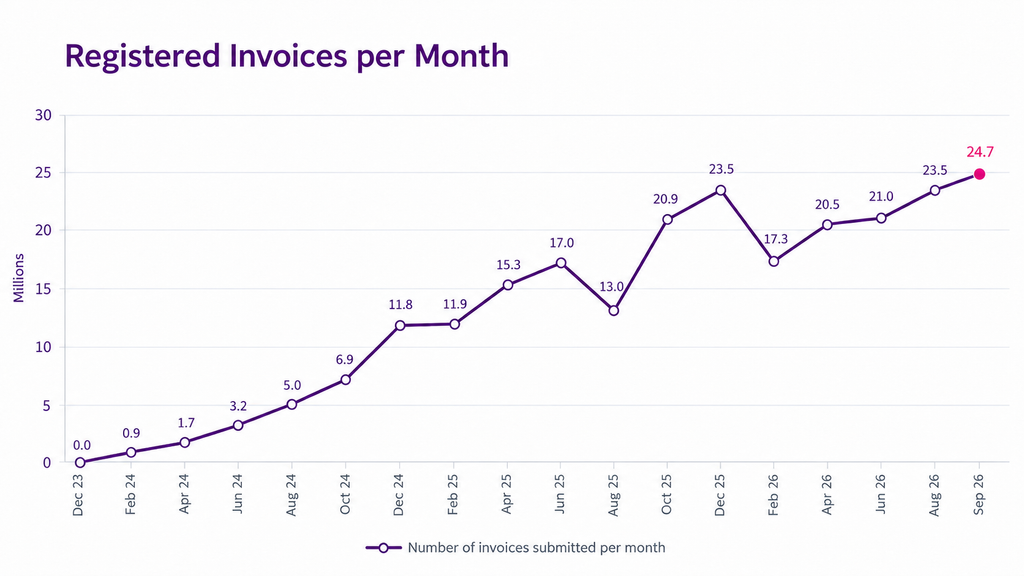
Figure 1. Monthly number of invoices registered through the e-Invoicing solution (December 2023–September 2026; selected months). Source: updated project data.
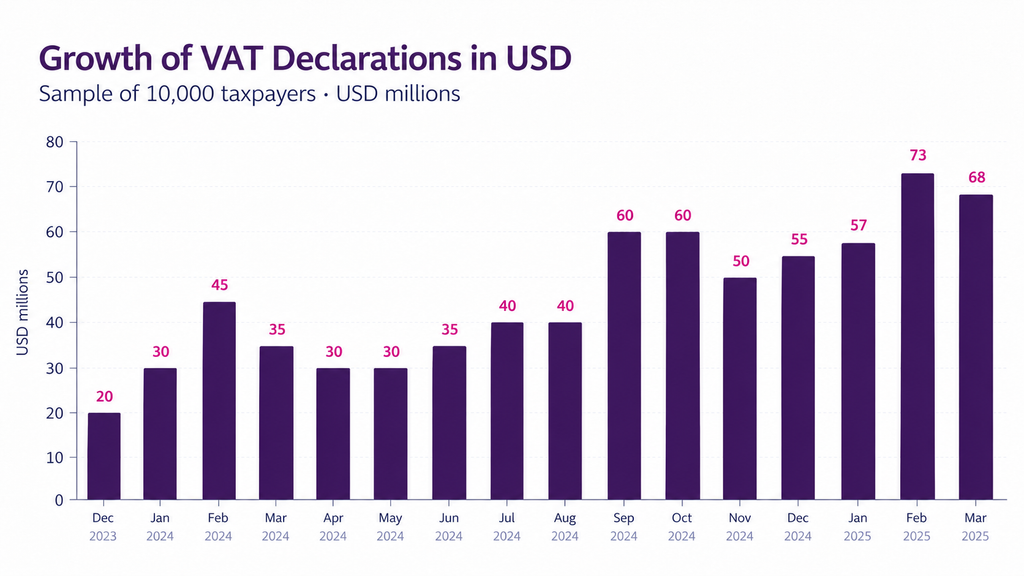
Figure 2. Monitoring and Tracking of VAT Declarations in USD by 10,000 Sampled Clients on the e-Invoicing solution System. Extracted from PowerBI e-Invoicing solution Project Dashboard.
Improved Voluntary Compliance
A sample analysis of 10,000 taxpayers onboarded to e-Invoicing solution revealed a noticeable increase in the consolidated amount of declared VAT in foreign currency (USD) over the observation period (see Figure 2).
VAT declarations rose from nearly $20 million to over $50 million demonstrating e-Invoicing solution’s role in strengthening tax compliance, reducing VAT fraud, and boosting revenue collections.
Easy Adaptation
Beyond invoice tracking and VAT revenue monitoring, e-Invoicing solution significantly improved taxpayer registration efficiency, surpassing the progress made over the previous decade. Only 16.38K taxpayers (42.75%) of the total 38.21K eligible taxpayers had registered under the old fiscalization system. However, within just two years of e-Invoicing solution implementation, 14.53K taxpayers (38%) were successfully onboarded, nearly matching the entire fiscalization registration progress of the previous 12 years. This accelerated registration rate underscores e-Invoicing solution’s ability to streamline compliance processes, making it easier for businesses to register and integrate into the country’s fiscal system.
Additionally, e-Invoicing solution provides automated reconciliation features, ensuring that declared VAT corresponds with actual fiscal invoices issued. This has enabled the national revenue authority to identify discrepancies more efficiently and take corrective measures in a timely manner.
The adoption of e-Invoicing solution represents a significant milestone in optimizing the country’s VAT revenue collection, improving not only the accuracy and efficiency of tax assessments but also strengthening the national revenue authority’s overall fiscal oversight.
The enhanced tracking and monitoring capabilities brought by e-Invoicing solution have improved voluntary compliance, as businesses are more likely to declare accurate tax amounts when they know their transactions are being monitored.
Improved Taxpayers Experience and Motivation
Before the implementation of e-Invoicing solution, taxpayers were required to print physical invoice files, Z-Reports, and input tax schedules to attach to their VAT tax returns. The process was cumbersome and time-consuming, as the national revenue authority officials had to manually verify the authenticity of invoices through third-party checks before approving VAT claims. This manual approach not only delayed processing but also increased the administrative burden on both taxpayers and tax officials.
With the introduction of e-Invoicing solution, invoices are now electronically transmitted to the national revenue authority servers via an API (interface), eliminating the need for printed Z-Reports. This automation has significantly reduced paperwork, improved efficiency, and enhanced the accuracy of tax submissions. Additionally, taxpayers and the public can independently verify issued invoices before submitting VAT claims through the verification portal. This level of transparency ensures greater trust in the system and reduces disputes related to invoice authenticity.
Moreover, e-Invoicing solution’s Self-Service Portals have revolutionized taxpayer interactions by enabling a range of self-service functionalities. Taxpayers can now:
- View their invoices and track their transaction history in real time.
- Submit reports and incident notifications without visiting the national revenue authority offices.
- Register additional fiscal devices for new business branches conveniently at any time.
- Retrieve and manage tax-related data without requiring physical interaction with tax officials.
With the introduction of e-Invoicing solution, invoices are now electronically transmitted to the national revenue authority servers via an API (interface), eliminating the need for printed Z-Reports.
These self-service capabilities have enhanced convenience, reduced compliance costs, and minimized administrative delays. The ability to access real-time invoice records and register fiscal devices remotely has also empowered taxpayers to take a more proactive role in managing their tax obligations. As a result, the e-Invoicing solution has not only improved tax compliance but has also transformed the taxpayer experience by making tax administration more accessible, efficient, and user-friendly.
Benefits of the E-Invoicing Solution to the Country’s Revenue Authority
The implementation of the e-Invoicing solution represents a significant step forward for the national revenue authority, offering technological advancements that enhance tax collection, audit capabilities, transparency, and efficiency.
By embracing digital transformation, the national revenue authority is positioned to create a more robust, fair, and efficient tax administration system, ensuring that revenue mobilization efforts keep pace with the evolving economic landscape.
1. Enhanced Tax Revenue Collection
One of the primary benefits of the e-Invoicing solution is its ability to improve revenue collection by minimizing human errors and reducing opportunities for tax evasion through automation. Since the e-Invoicing solution is integrated with other systems such as the Tax and Revenue Management System (TaRMS) and the Customs System (Asycuda), it enables real-time tracking of transactions, ensuring that all taxable activities are accurately recorded and declared to the national revenue authority. This integration enhances data accuracy, expands the tax base, and increases voluntary compliance, boosting the national revenue authority’s revenue collection capabilities. Furthermore, the e-Invoicing solution strengthens enforcement efforts by flagging discrepancies between tax declarations and actual transactions, making it easier to detect underreporting and fraudulent activities.
2. Reports, Real-Time Monitoring, and Analysis
The e-Invoicing solution provides the national revenue authority with instant access to fiscalization data, allowing for quicker decision-making and faster response to reported cases. The system generates detailed reports and analytics, offering deep insights into operational trends, taxpayer behavior, and compliance rates. By leveraging these insights, the national revenue authority can identify revenue leakages, assess sector-specific tax performance, and implement targeted interventions to address compliance gaps. Additionally, the real-time nature of the system enables proactive monitoring, helping tax authorities anticipate and mitigate risks before they escalate. This data-driven approach ensures that tax enforcement is not only reactive but also preventive, thereby improving overall revenue administration.
3. Enhanced Audit Capabilities
The e-Invoicing solution provides the national revenue authority with advanced audit tools that can analyze large volumes of data to identify discrepancies and potential cases of tax evasion. The system is designed to flag unusual invoicing patterns or inconsistencies, enabling tax auditors to focus their efforts on high-risk cases. This targeted approach improves the effectiveness and efficiency especially in audit case selection. 3
4. Improved Efficiency and Productivity
Previously, the national revenue authority’s manual fiscalization administration processes were time-consuming and prone to inefficiencies such as duplication of records, delays in tax processing, and lack of streamlined workflows. The e-Invoicing solution has significantly streamlined these processes by automating tasks, including fiscal device registration, invoice recording, tax calculations, and VAT input tax schedule filing. This automation not only reduces the workload on the national revenue authority officials but also allows them to shift their focus to more strategic activities, such as risk 4 assessment, compliance intelligence gathering, taxpayer education, and targeted audits. The result is a more efficient and responsive tax administration system, where processes are faster, decision-making is data-driven, and taxpayer services are significantly improved. With implementation of the e-Invoicing solution, staff has been reduced from 120 to 45 including ICT personnel, with remainder transferred to other sections, where they enforce compliance issues.
5. Enhanced Transparency and Accountability
Transparency is a cornerstone of effective tax administration and a fundamental principle of taxation. The e-Invoicing solution enhances transparency by creating an auditable trail of all fiscal transactions, making it easier to track, review, and validate VAT-related activities. This reduces the risk of fraud, corruption, and manipulation of tax records, fostering greater trust between the national revenue authority and taxpayers. Additionally, the system provides both the national revenue authority officials and taxpayers with real-time access to critical tax data, including sales transactions, tax obligations, reversals, and payments due. By ensuring that all stakeholders have equal access to tax-related information, the e-Invoicing solution promotes accountability and compliance, strengthening the integrity of the country’s tax system.
6. Cost Savings to the Country’s Revenue Authority
While the initial investment in the e-Invoicing solution may be significant, its long-term cost savings far outweigh the costs. By automating manual fiscalization processes and VAT administration tasks, the system reduces reliance on paper-based records, eliminates unnecessary administrative expenses, and optimizes resource allocation. Additionally, the e-Invoicing solutions ability to detect and prevent fraud, errors, and tax evasion results in substantial financial savings for the national revenue authority. By minimizing the occurrence of fiscal device manipulation, invoice fraud, and non-compliant tax reporting, the system helps preserve revenue and lower enforcement costs. Furthermore, streamlining tax processes and reducing manual interventions also improves operational efficiency, allowing the national revenue authority to allocate its budget toward strategic tax reforms and modernization initiatives.
7. Data Quality
The e-Invoicing solution has introduced real-time data quality controls, which ensure that the data received by the national revenue authority meets basic technical and business quality criteria. Over 50 automated validations performed by e-Invoicing solution ensure that the information received can be used directly in assessing taxpayer compliance, running the audits and reconciling information with other systems.
Challenges the Revenue Authority Faced During the Implementation of the E-Invoicing Solution
Several challenges emerged during and after the implementation of the e-Invoicing solution, highlighting areas that required further improvements, upgrades, or policy adjustments. These challenges, in some cases, delayed full adoption, affected compliance rates, and revealed gaps that needed to be addressed to enhance the effectiveness of the system. Below are some of the key obstacles encountered:
1. Taxpayers’ System Compatibility with the E-Invoicing Solution
The implementation of e-Invoicing solution required taxpayers to upgrade their existing fiscal devices, accounting systems, point-of-sale (POS) systems, and enterprise servers to comply with e-Invoicing solution API Gateway requirements. However, not all systems were compatible, and some taxpayers faced technical challenges in developing or upgrading APIs to meet e-Invoicing solution compliance standards. These difficulties delayed the onboarding process, resulting in gaps in VAT administration and compliance. The incompatibility of certain systems contributed to a fragmented tax landscape, where some taxpayers remained outside the e-Invoicing solution framework, limiting the national revenue authority’s ability to fully monitor VAT transactions and ensure comprehensive revenue tracking. Nevertheless, despite these challenges, e-Invoicing solution’s registration rate in just two years has nearly matched what the previous system achieved over a decade, demonstrating its efficiency in accelerating taxpayer onboarding.
2. Resistance to Change
Despite e-Invoicing solution’s benefits, some taxpayers were reluctant to adopt the system, citing various concerns, including cost implications, technical challenges, and general resistance to new regulatory requirements. Many businesses hesitated to transition due to perceived operational disruptions, lack of adequate training, and unfamiliarity with the new digital requirements. This resistance delayed onboarding and slowed down the overall implementation process, requiring increased awareness campaigns, stakeholder engagement, and taxpayer education initiatives to encourage adoption.
3. Underutilized Data
Although large volumes of fiscal transaction data were being collected through the e-Invoicing solution, the full analytical potential of this data was not yet fully realized. The system had the capability to enhance risk assessment, compliance monitoring, and audit planning, but its utilization for advanced data-driven enforcement remained limited. The lack of structured frameworks for data interpretation hindered the national revenue authority’s ability to leverage fiscal data for proactive risk detection, fraud prevention, and policymaking. Investment in big data analytics and predictive modeling would be needed to utilize e-Invoicing solution data in a full scale and improve enforcement strategies.
4. High Costs of Hardware Fiscal Devices
The high acquisition costs of physical fiscal devices posed a significant barrier to adoption, particularly for small and medium-sized enterprises (SMEs). While larger corporations could afford virtual fiscalization solutions with direct API integration into the national revenue authority’s servers, smaller businesses faced financial constraints in purchasing approved hardware fiscal devices from suppliers. As a result, many taxpayers delayed compliance or opted for the cheapest available options, which sometimes lacked full functionality.
Although virtual fiscalization was introduced to reduce costs, it remained largely accessible to well-resourced entities that had the necessary IT infrastructure to integrate their systems with the national revenue authority’s servers. Recognizing this challenge, the national revenue authority introduced two types of free cash register applications (Android and Windows) specifically designed for small businesses to report sales, ensuring that fiscalization compliance was more accessible and affordable for all taxpayers. Despite this initiative, many SMEs still required additional technical support and training to effectively transition from traditional fiscal devices to digital reporting solutions.
5. Legislative Framework Misalignment
the country’s fiscalization regulations were initially gazetted, long before the introduction of the e-Invoicing solution. As a result, the legal framework was not fully aligned with the new system’s technological advancements. Key e-Invoicing solution features, such as software-based fiscal devices, automation of compliance processes, digital fiscal signatures (QR codes), and the use of harmonized system (HS) codes on fiscal invoices, were not explicitly covered under the existing legislation. Legislative amendments were required to enforce e-invoicing solution functionalities, but the lengthy parliamentary approval process posed delays. This misalignment created regulatory uncertainties and slowed down the adoption of certain digital features, requiring policy revisions and legal adjustments to fully integrate e-Invoicing solution into the country’s tax framework.
Despite these challenges, the national revenue authority has continued to refine the e-Invoicing solution through system upgrades, regulatory adjustments, and enhanced taxpayer engagement strategies. Addressing these obstacles is critical for ensuring long-term success and sustainability of the digital fiscalization system.
Lessons Learned from e-Invoicing Implementation: Insights and Recommendations from NRD Companies
Implementing a digital fiscalization system involves more than introducing new technology. It requires a comprehensive approach that combines electronic fiscal devices, back-end reporting capabilities, data analytics, supporting infrastructure, and a well-structured implementation ecosystem.
NRD Companies’ experience supporting the implementation of an e-Invoicing solution for a national revenue authority in an African country demonstrates how digital fiscalization can strengthen tax compliance, reduce revenue leakages, and improve transparency. The project also highlighted the importance of careful planning, stakeholder engagement, and alignment between technological capabilities and regulatory requirements.
Drawing on this implementation experience, we have identified six key lessons that can help other tax administrations plan and execute similar digital transformation initiatives.
Establishing a clear legal and regulatory framework. A comprehensive legal and regulatory framework is essential for the successful implementation of digital fiscalization systems. In this project, existing regulations initially contained gaps and did not fully address several features of the e-Invoicing solution, including requirements for printing QR codes on fiscal invoices, defining compliance obligations, and establishing applicable penalties for noncompliance. This experience reinforced the importance of aligning legislation with technological requirements early in the implementation process to prevent delays, reduce legal uncertainties, and support effective system adoption.
Ensuring early and continuous stakeholder engagement. Successful implementation depends on cooperation among taxpayers, technology providers, accounting system developers, fiscal device manufacturers, approved suppliers, and government agencies. During the project, gaps in stakeholder engagement contributed to onboarding delays and technical adoption challenges. Our experience highlights the importance of continuous communication, awareness campaigns, and training programs that help stakeholders understand the benefits, technical requirements, and compliance expectations associated with the new system. Engaging business associations and industry groups can further facilitate communication and support a smoother transition.
Adopting an agile and phased implementation approach. For this project, NRD Companies proposed a three-phase strategy that enabled the revenue authority to introduce core functionality before progressively expanding the system’s capabilities and coverage. The first phase focused on developing a Minimum Viable Product (MVP) with essential compliance features. The second phase gradually expanded functionality for VAT-registered taxpayers to improve data collection and compliance enforcement. The third phase extended the solution to non-VAT-registered taxpayers and introduced advanced functionalities. This incremental approach minimized operational disruptions, allowed for adjustments based on stakeholder feedback, and helped users gradually adapt to the new system.
Learning from global best practices and selecting an experienced technology partner. Before implementing the e-Invoicing solution, the revenue authority conducted study tours in countries with established fiscalization models. These visits provided insights into technological approaches, compliance enforcement, stakeholder engagement, and implementation challenges. To accelerate the modernization of VAT administration, the country partnered with NRD Companies, drawing on our experience in fiscalization, e-Invoicing, and tax administration digitalization. Our existing proprietary e-Invoicing platform enabled system integration, localization, and scalability, supporting implementation in less than one year. The benefits became evident during the early rollout stages, with the research reporting a 5% increase in tax compliance within the first three months of partial implementation. This experience demonstrates the value of combining proven technology with an implementation approach adapted to the local regulatory, institutional, and technological environment.
Building robust ICT infrastructure and technical capabilities. Reliable ICT infrastructure is essential for maintaining the performance, security, and sustainability of digital fiscalization systems. Key considerations during the project included establishing centralized storage facilities and disaster recovery infrastructure, developing databases capable of processing large volumes of transactional data, strengthening cybersecurity, and providing technical support to taxpayers and revenue authority staff. The implementation also highlighted the importance of data analytics tools for identifying patterns of noncompliance, detecting potential tax evasion, and improving risk assessment. Addressing these requirements as part of the overall implementation strategy supports system reliability, operational efficiency, and the long-term use of fiscal data.
Maintaining active monitoring and evaluation. Implementing an e-Invoicing solution is not a one-time technological exercise. While the system introduced real-time transaction tracking and compliance monitoring, continuous evaluation remains essential for maintaining its effectiveness. Tracking Key Performance Indicators (KPIs), such as compliance rates, revenue growth, and taxpayer satisfaction, helps identify areas for improvement. Regular performance reviews and feedback from taxpayers, enforcement officers, and system users support ongoing system refinement. Based on this experience, we emphasize the importance of dedicated teams responsible for monitoring performance, refining policies, and coordinating technical improvements to ensure that the solution continues to meet evolving institutional needs.
NRD Companies’ Recommendations for Tax Administrations
Drawing on our experience implementing digital fiscalization solutions, we recommend that tax administrations considering e-Invoicing modernization prioritize the following:
- Align legislation with technological requirements: Review and update regulatory frameworks before implementation to ensure that digital fiscalization functionalities and compliance obligations are legally supported.
- Select an experienced technology partner: Work with a provider offering a proven solution and a demonstrated track record in comparable tax administration modernization projects.
- Engage stakeholders from the outset: Maintain continuous communication with taxpayers, technology providers, government institutions, and other relevant stakeholders to support adoption.
- Implement the solution in phases: Introduce essential functionalities first, then gradually expand system capabilities and taxpayer coverage to minimize operational disruptions.
- Draw on international experience: Use study tours, benchmarking, and collaboration with experienced technology providers to identify relevant implementation practices.
- Invest in reliable ICT infrastructure: Prioritize data storage, cybersecurity, system integration, and technical capabilities to support operational efficiency and long-term sustainability.
- Establish continuous monitoring and improvement processes: Use performance indicators, data analysis, and stakeholder feedback to evaluate system effectiveness and guide future improvements.
- Provide accessible reporting tools for small businesses: Consider free or affordable invoicing applications to reduce compliance costs and facilitate broader participation in digital fiscalization.
Our experience demonstrates that successful e-Invoicing implementation requires a coordinated approach combining technology, regulatory readiness, institutional capacity, and stakeholder engagement. Addressing these areas throughout the implementation process can help tax administrations strengthen VAT compliance, improve revenue collection, and establish a foundation for more effective and sustainable digital tax administration.
Key Outcomes of the Implementation
The implementation of the e-Invoicing solution enabled the national revenue authority to move from traditional, largely manual fiscalization processes toward a more automated, transparent, and data-driven approach to VAT administration.
The project demonstrated improvements across several areas:
- Strengthened Compliance Enforcement: Improved the ability to track and monitor taxpayer sales transactions and invoicing behavior, automate fiscal device registrations, and conduct more efficient compliance inspections.
- Improved VAT Revenue Collection: Enabled real-time transaction monitoring, supported more accurate tax declarations, and contributed to stronger VAT revenue mobilization through improved compliance and fraud detection.
- Enhanced Taxpayer Service Delivery: Introduced Self-Service Portals that simplified taxpayer registration, invoice verification, and compliance tracking for taxpayers and approved suppliers.
- Greater Operational Efficiency and Productivity: Reduced manual administrative workloads, allowing revenue authority staff to focus on higher-value activities, including strategic auditing, intelligence gathering, and compliance monitoring.
- Increased Transparency and Accountability: Established real-time, auditable transaction records that reduced opportunities for fraud and manipulation while supporting greater trust between the revenue authority and taxpayers.
- Improved Reporting and Data Analysis: Provided advanced reporting and analytics capabilities to assess taxpayer behavior, monitor trends, identify compliance risks, and support more informed decision-making.
- Operational Cost Savings: Reduced reliance on paper-based processes, automated fiscal device registration, and improved fraud prevention, contributing to long-term operational efficiencies and cost reductions.
These outcomes demonstrate how digital fiscalization can improve the efficiency and effectiveness of VAT administration while establishing a stronger foundation for data-driven compliance enforcement.
Final Perspective
For NRD Companies, this project demonstrates how a proven e-Invoicing solution, combined with an implementation approach tailored to the local environment, can support measurable improvements in tax administration.
The experience reinforces our view that technology alone is not sufficient to achieve sustainable digital transformation. Successful implementation depends on aligning digital solutions with institutional processes, regulatory requirements, technical capabilities, and the needs of taxpayers.
While the project presented implementation challenges, it also demonstrated the value of phased deployment, stakeholder cooperation, and continuous system improvement. These lessons are particularly relevant for tax administrations seeking to modernize fiscalization processes and strengthen their capacity for effective compliance enforcement.
The findings presented in this research provide practical insights into how e-Invoicing can support improved tax compliance, greater transparency, operational efficiency, and domestic resource mobilization. They also highlight the importance of selecting an experienced technology partner capable of adapting proven solutions to the specific needs of each tax administration.
Through our experience in digital fiscalization and tax administration modernization, NRD Companies continues to support public institutions in implementing technology-driven solutions that strengthen revenue administration and contribute to more efficient and sustainable public services.
References
African Tax Administration Forum. (2024, November). Practical considerations for the design and implementation of certified electronic invoicing system. https://ataftax.org/library/practical-considerations-for-the-design-and-implementation-of-certified-electronic-invoicing-system/
Asian Development Bank. (2022). Launching a digital tax administration transformation: What you need to know. https://doi.org/10.22617/TCS210343
Bellon, M., Dabla-Norris, E., Khalid, S., & Lima, F. (2022). Digitalization to improve tax compliance: Evidence from VAT e-Invoicing in Peru. Journal of Public Economics, 210, Article 104661. https://doi.org/10.1016/j.jpubeco.2022.104661
Carrillo, P., Pomeranz, D., & Singhal, M. (2017). Dodging the taxman: Firm misreporting and limits to tax enforcement. American Economic Journal: Applied Economics, 9(2), 144–164. https://doi.org/10.1257/app.20140495
Nose, M., & Mengistu, A. (2023, December 11). Exploring the adoption of selected digital technologies in tax administration: A cross-country perspective. IMF Notes. International Monetary Fund. https://doi.org/10.5089/9798400258183.068
Organisation for Economic Co-operation and Development. (2020). Tax Administration 3.0: The digital transformation of tax administration. OECD Publishing. https://doi.org/10.1787/ca274cc5-en
Organisation for Economic Co-operation and Development. (2022). Tax Administration 3.0 and electronic invoicing: Initial findings. OECD Publishing. https://doi.org/10.1787/2ffc88ed-en
Organisation for Economic Co-operation and Development. (2023). Tax Administration 2023: Comparative information on OECD and other advanced and emerging economies. OECD Publishing. https://doi.org/10.1787/900b6382-en
Cheng, Q., Chen, B., & Luo, J. (2024). The impact of digital tax administration on local government debt: Based on the revision of the tax collection and administration law. Finance Research Letters, 67 (Part B), Article 105938. https://doi.org/10.1016/j.frl.2024.105938
Tang, P., Qiu, W., Huang, Z., Chen, S., Yan, M., Lian, H., & Li, Z. (2020). Anomaly detection in electronic invoice systems based on machine learning. Information Sciences, 535, 172–186. https://doi.org/10.1016/j.ins.2020.03.089
Junquera-Varela, R. F., Lucas-Mas, C. O., Krsul, I., Calderon, V., & Arce, P. (2022). Digital transformation of tax and customs administrations. World Bank. https://hdl.handle.net/10986/37629
About NRD Companies
NRD Companies is a global IT and consulting group of companies, specializing in governance and economic digital infrastructure development. Incorporated in Norway, headquartered in Lithuania, the group unites companies operating in Fintech, GovTech, and practice-based consulting areas in aiding countries to reach UN sustainable development goals. NRD Companies have a successful track record of implementing projects, such as e-service, e-registers, delivery platforms, national post digitalization, tax administration platforms, and other digital solutions, in all 5 continents.


